


Automotive businesses keep people moving, but getting paid is not always as straightforward as it is in a traditional retail store.
A customer may arrive for routine maintenance and discover an unexpected repair. Another may need tires, towing, body work, detailing, or a larger service that was not part of the day’s original budget. The payment experience matters because it is often the final step in a stressful or time-sensitive visit.
Accepting credit cards and choosing equipment that fits the shop can make payment easier for the customer and more manageable for the business.
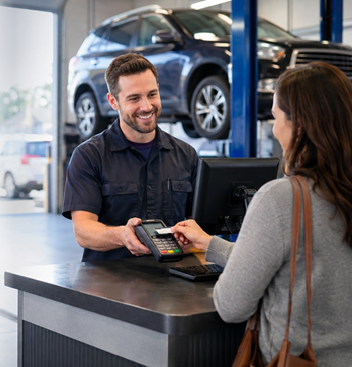
Make a Necessary Payment Easier
Customers do not always arrive prepared to pay a repair bill with cash. Card acceptance gives them another way to handle needed work and can reduce the frustration of leaving to find another payment method.
A clear, convenient checkout process also supports the overall customer experience. When payment feels organized and simple, it can reinforce the trust the business worked to build during the repair or service.
Support Larger Automotive Transactions
Automotive services often involve larger tickets than everyday retail purchases. Tires, body work, major repairs, towing, parts, and specialty services may be placed on credit or rewards cards because customers want flexibility with an unexpected expense.
Giving customers a secure way to use the card they prefer may help the business complete the transaction without asking the customer to reduce necessary work solely because of the cash available that day.
Create a Better Checkout Flow
Some automotive businesses collect every payment at a front desk or service counter. Others need employees to move between a waiting room, office, service bay, parking area, or customer location.
A countertop terminal may be the right fit for a repair shop, tire store, auto parts business, or body shop with a designated checkout area. A portable terminal may work better for a larger facility, towing company, detailer, or mobile mechanic that wants to bring the payment device directly to the customer.
Simplify Tracking and Reconciliation
Electronic payments can be easier to track than cash and can give the business clearer transaction records. Depending on the setup, the payment system may also support receipts, reporting, employee access, and other tools that make day-to-day reconciliation easier.
Support Repeat and Referral Business
Automotive businesses grow through trust, repeat customers, and referrals. A smooth payment experience is one more part of making the customer feel taken care of. It does not replace good service, but it can strengthen the final impression.
Automotive Businesses That May Benefit
Auto repair shops
Tire stores
Body shops
Auto detailers
Towing companies
Auto parts businesses
Mobile mechanics
Oil change and maintenance businesses
Specialty vehicle service providers
Questions Worth Asking
How are customers currently paying for repairs and services?
Can the business accept payments only at the front counter, or throughout the shop?
Does the current terminal accept chip, contactless, and mobile-wallet payments?
Are deposits arriving when expected?
Is the business paying a monthly equipment fee or lease?
When was the last time someone reviewed the processing statement?
A complimentary statement review can help an automotive business understand its effective rate, monthly charges, equipment costs, funding, and service. Depending on the current setup, a review may uncover opportunities to reduce processing costs by as much as 20 to 25 percent. Savings vary and are not guaranteed.
A Simple Next Step
1. Choose the best checkout location for customers and employees. 2. Review whether a countertop or portable terminal fits the shop best. 3. Submit a recent statement for a no-pressure review of pricing, fees, equipment, and service. |
Keep the Shop and the Checkout Moving Explore terminal options built for the way automotive businesses serve and collect from customers. |

Subscribe To OurBlog
Join our mailing list to receive the latest news and updates from our team.